Convert Images to PDF Online: JPG, PNG, WebP and HEIC
Images are useful for capturing receipts, scanning paperwork, sharing photographs, and saving important information. However, when you need to send multiple images together, a PDF document is often easier to organize, share, and print.
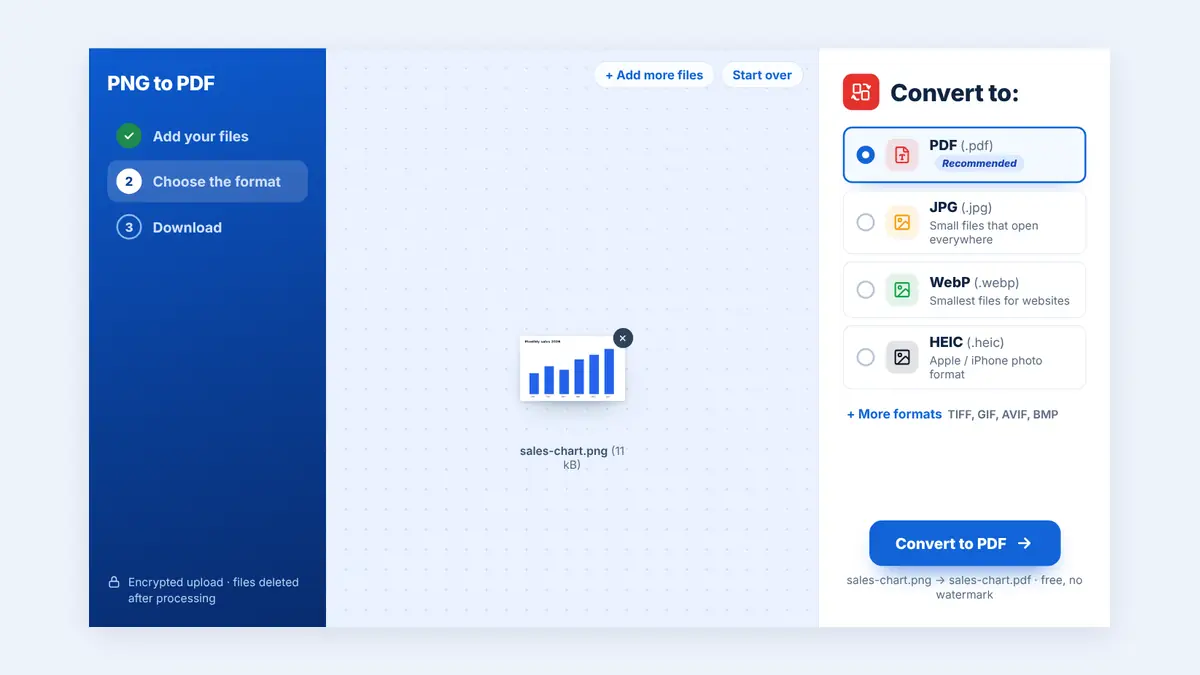
Converting images to PDF allows you to combine photographs, screenshots, scanned pages, and other image files into a single document. In this guide, you will learn how to convert images to PDF, choose the right image format, maintain image quality, and prepare a document for everyday use.
Why Convert Images to PDF?
Image files such as JPG, PNG, and WebP are convenient, but sharing several separate files can become confusing. A PDF brings your images together in a document that is generally easy to open and distribute.
Here are some common reasons to convert images to PDF:
Combine multiple images: Put several photos or scanned pages into one document.
Prepare documents for submission: Organize identification copies, forms, receipts, or supporting documents.
Share files more easily: Send one PDF instead of multiple image attachments.
Create printable documents: Arrange images into pages suitable for printing.
Keep records organized: Store invoices, expense receipts, certificates, and other paperwork together.
Preserve page order: Arrange images in the sequence you want readers to follow.
How to Convert Images to PDF Online
An online image-to-PDF converter can help you create a PDF without installing desktop software.
Step 1: Prepare Your Images
Choose the images you want to convert. Common formats include JPG, JPEG, and PNG. Check that the files are readable, correctly oriented, and in the order you want them to appear.
If you are converting photographs of documents, make sure the text is clear and the entire page is visible.
Step 2: Open an Image-to-PDF Tool
Visit HuntPDF.com and look for an available image-to-PDF conversion tool.
Choose a tool that supports your image formats and allows you to combine multiple images into one PDF if that is your goal.
Step 3: Upload Your Images
Select your image files using the upload option. Add all the images you want to include. You can mix JPG, PNG, WebP, and HEIC files.
For documents containing several pages, double-check the order before converting them.
Step 4: Adjust the Page Settings
Depending on the converter, you may be able to select page size, orientation, margins, or image placement.
For portrait documents, portrait page orientation is usually appropriate. For wide photographs or landscape charts, landscape orientation may help preserve the image's proportions.
Avoid stretching images to fill a page if doing so makes text or objects look distorted.
Step 5: Convert and Download the PDF
Start the conversion and download the resulting PDF when processing is complete.
Open the new document and review every page. Confirm that the images are in the correct order, text is readable, and no important content has been cropped.
Understanding Common Image Formats
Choosing the right source format can help you balance image quality, file size, and compatibility.
| Image format | Best use | Key consideration |
|---|---|---|
| JPG/JPEG | Photographs and everyday images | Usually offers smaller files, but uses lossy compression |
| PNG | Screenshots, diagrams, and images with sharp text | Often preserves crisp edges but can create larger files |
| WebP | Web images and compressed graphics | Efficient compression, but converter compatibility may vary |
| TIFF | High-quality scans and professional imaging | Can produce large files and may not be supported by every online tool |
For ordinary photographs, JPG is often a practical choice. For screenshots containing text or diagrams with sharp lines, PNG may preserve details better.
The final PDF's size and quality also depend on how the converter handles the original images.
How to Maintain Image Quality When Converting to PDF
A PDF conversion should make your images easier to share without making them difficult to read.
Start with Clear Images
A converter cannot reliably restore details that are missing from a blurry, poorly lit, or low-resolution image. Whenever possible, use the original image rather than a compressed copy downloaded from a messaging application.
Choose the Right Page Size
For scanned documents, A4 is a common choice in many countries. For photographs, a page layout that suits the image's proportions may be preferable.
Avoid Unnecessary Resizing
Stretching an image can distort its appearance. Check the preview to make sure each image fits on its page without being cut off.
Check Text and Fine Details
After conversion, zoom in on small text, signatures, numbers, and diagrams. If the images will be printed, check that the details remain readable at the intended print size.
How to Convert Multiple Images into One PDF
Combining several images into one PDF is especially useful when preparing a multi-page document.
For example, if you photograph five pages of a signed form, you can combine the five images into one PDF instead of sending five separate attachments.
Follow these steps:
Select all the images you need.
Arrange them in the correct page order.
Choose a converter that supports multiple images in one PDF.
Set the page layout and orientation if those options are available.
Convert the images and download the PDF.
Open the document and confirm that all pages are present.
Use descriptive filenames for your original images to make selecting and ordering them easier.
How to Reduce the PDF File Size
A PDF containing many high-resolution photographs can become large. This may make it slower to upload, download, or send by email.
To reduce the file size:
Remove images that are not needed.
Resize excessively large images before conversion when appropriate.
Avoid repeatedly saving images in lossy formats, which can reduce quality.
Use a PDF compression tool if the finished document is too large.
Review the compressed file to ensure that text and important details remain readable.
If a website or application has a file-size limit, check the requirement before converting your images.
Common Image-to-PDF Problems
Images appear sideways: Rotate the original images or use the converter's orientation controls before creating the PDF.
The page edges are cut off: Review margins, scaling, and image placement settings.
The PDF is too large: Reduce unnecessary image dimensions or compress the completed PDF.
The images appear blurry: Start with higher-quality originals and avoid excessive compression.
Pages appear in the wrong order: Arrange the images before converting and check the final PDF.
The text inside an image is not searchable: A standard image-to-PDF conversion may create pages containing images rather than selectable text. If you need searchable text, use OCR software that supports text recognition.
Is It Safe to Convert Images to PDF Online?
Before uploading images, consider what they contain. Receipts, identity documents, signed forms, and business records may include sensitive personal or financial information.
Review the conversion service's privacy policy and file-handling practices before uploading confidential material. For highly sensitive documents, consider using trusted offline software.
After downloading your PDF, store and share it carefully. Converting images to PDF does not automatically hide personal information or protect the document with a password.
Frequently Asked Questions
Can I convert JPG images to PDF?
Yes. JPG and JPEG images are commonly used for PDF conversion. The final result depends on the converter and the image settings.
Can I combine multiple images into one PDF?
Yes. You can arrange the images in the desired order and combine them into one document.
Can I convert PNG screenshots to PDF?
Yes. PNG is commonly used for screenshots, diagrams, and images containing text. Review the resulting pages to ensure the text remains clear.
Does converting an image to PDF reduce its quality?
It can, depending on the conversion settings and compression applied. Use clear source images and inspect the finished PDF before sharing it.
Can I convert images to PDF on my phone?
Yes. You can use a compatible mobile browser or a PDF application to select images, convert them, and save the resulting document.
Will converting an image to PDF make the text searchable?
Not necessarily. If the PDF contains only images, you may need OCR to recognize the text and make it searchable.
Conclusion
Converting images to PDF is a practical way to combine photographs, screenshots, receipts, and scanned pages into an organized document. Choose a suitable image format, arrange the pages carefully, and review the final PDF for quality and readability.
Visit HuntPDF.com to turn images into PDFs for free.
Free HuntPDF tools for this task
- Convert images to PDF: mix JPG, PNG, WebP and HEIC
- PNG to PDF converter: keep screenshots sharp
- Merge PDFs together: join several PDFs into one
- HuntPDF.com: every free PDF and image tool in one place, with no sign-up and no watermark
Related guides: How to turn JPG photos into one PDF · PDF to JPG or PNG: which to choose


Comments
Post a Comment